
Walk in at tempo
An audition tests more than your pieces. You read or play a rhythm chart you have never seen before, clap back what you hear, keep the pulse yourself and play in style. Practise all of it, a little every day.
Four schools, four auditions
Every school asks for something different. Here is what four of them publish for drummers, and what in Timekeeper trains each part.
| The part | DJM | Berklee | MI | BIMM | In Timekeeper |
|---|---|---|---|---|---|
| Read a rhythm chart on sight | Clap a notated rhythm | Basic to complex | · | Sight reading | Roll, and Shift printing any rhythm as notation |
| Clap or play back what you hear | Each phrase played at most twice | Call and response | · | · | Roll: listen first, then show it |
| Steady time, with or without a click | With the pulse in your feet (Aalborg) | · | Recorded to a metronome | A groove with the metronome at 100 or 80 | Inner Pulse, and the pulse test |
| Grooves in contrasting styles | Accompany in your role | Swing, shuffle, funk, rock, bossa, mambo, calypso, reggae | A syncopated groove with fills | Two contrasting styles, 16 bars each | Beats, and the grooves above |
| Rudiments at a set tempo | · | · | Two of six, consistent | Singles 100 to 160, doubles and paradiddles 100 to 140 | The Tempo Trainer, from slow up to the top of the range |
| Your own music, live or recorded | A 10-minute concert with your own band | A prepared piece, 3 to 5 minutes | Two performances | A song to a drumless backing track | Loop the hard bars, bring them to tempo, play in Focus |
From what each school publishes for drummers, checked October 2026: Det Jyske Musikkonservatorium, Berklee College of Music, Musicians Institute, BIMM. A dot means it is not in their published requirements, not that it will never come up. Always check your own school's current requirements.
Nerves pull you ahead of the beat. By how much?
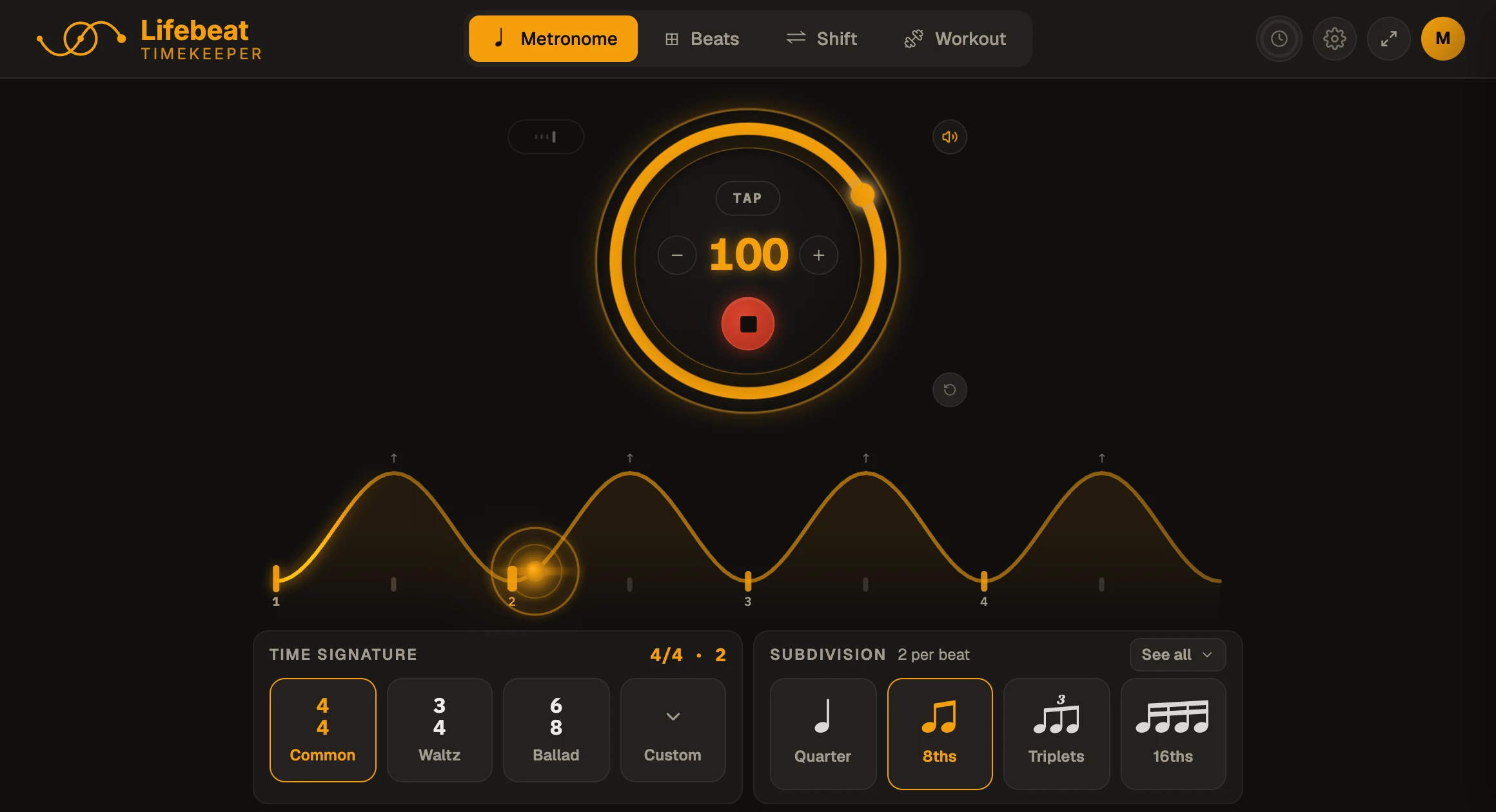
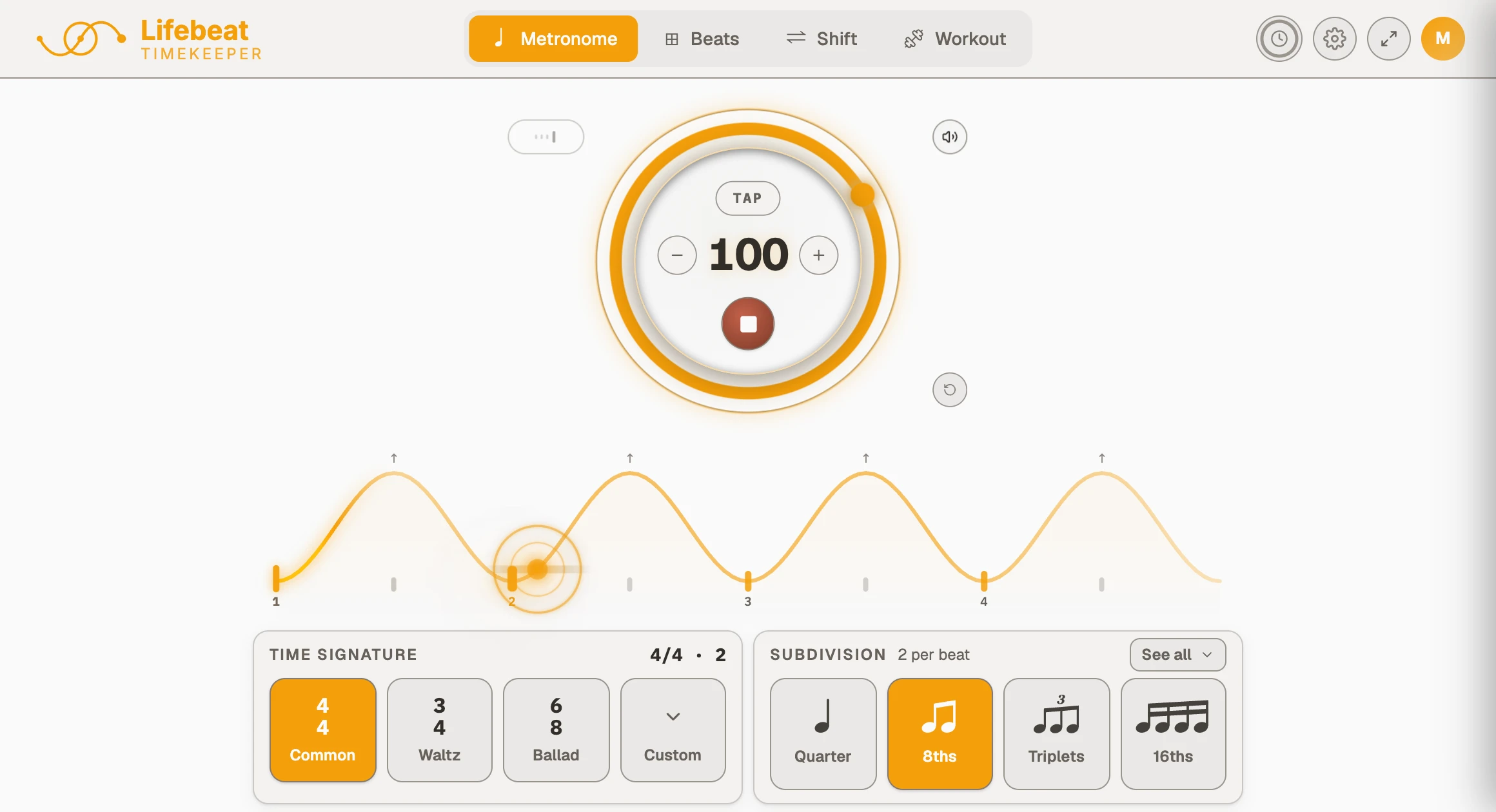
Tap along, then the click goes quiet. When it comes back, were you early, late or dead on? Do it now, then do it the morning of the audition.
Keep the time when nothing keeps it for you
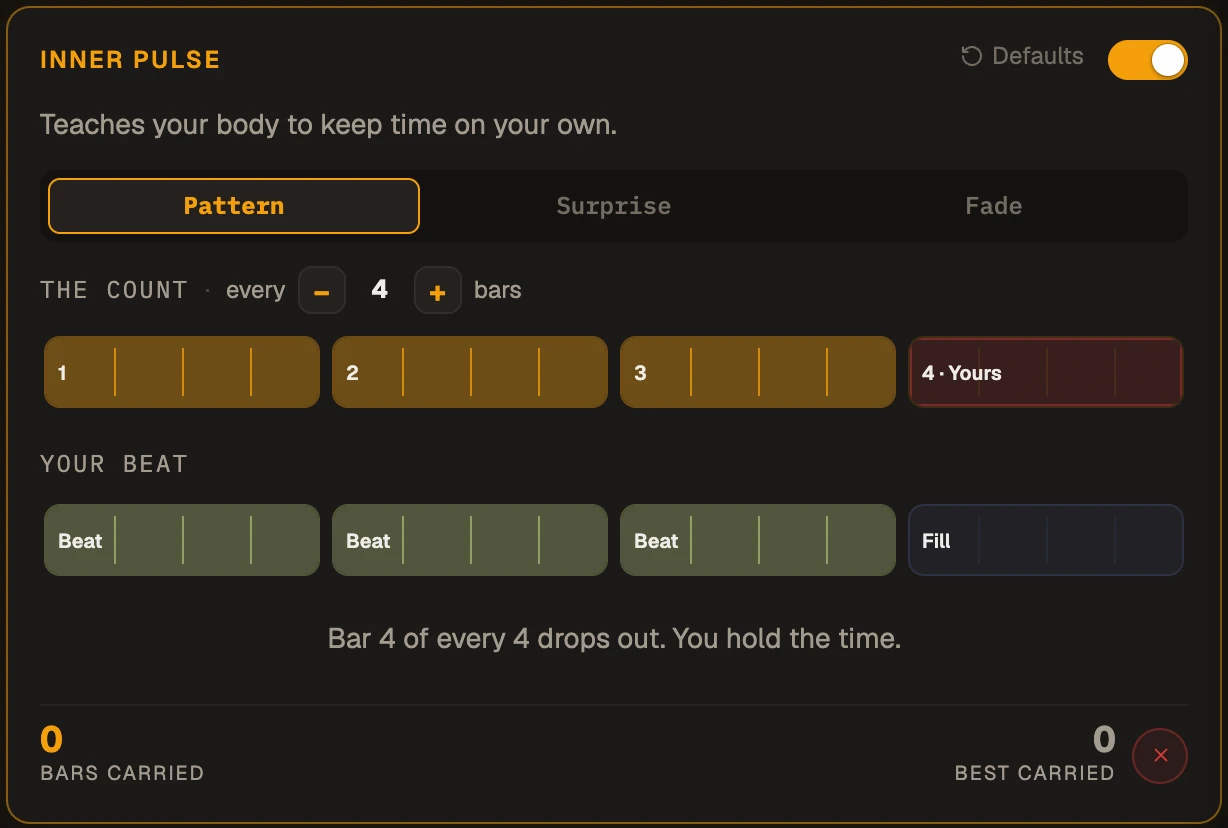
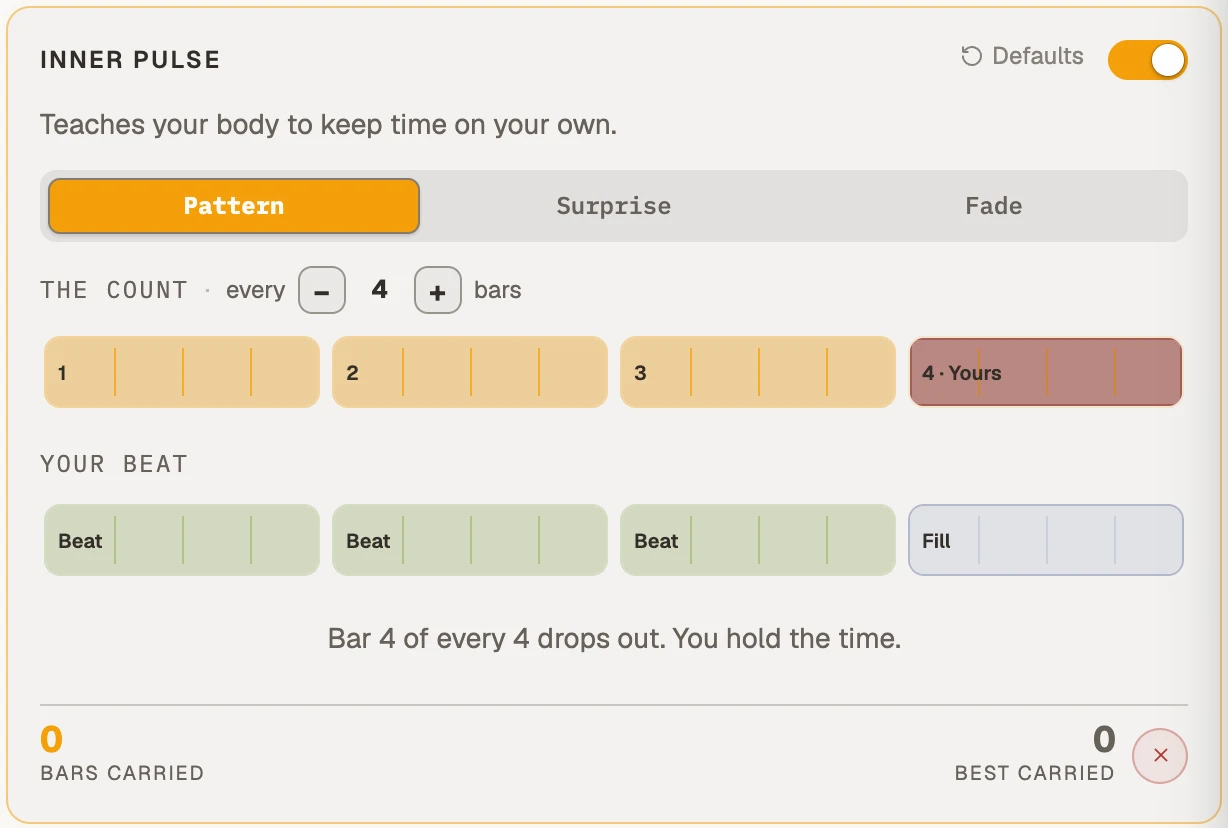
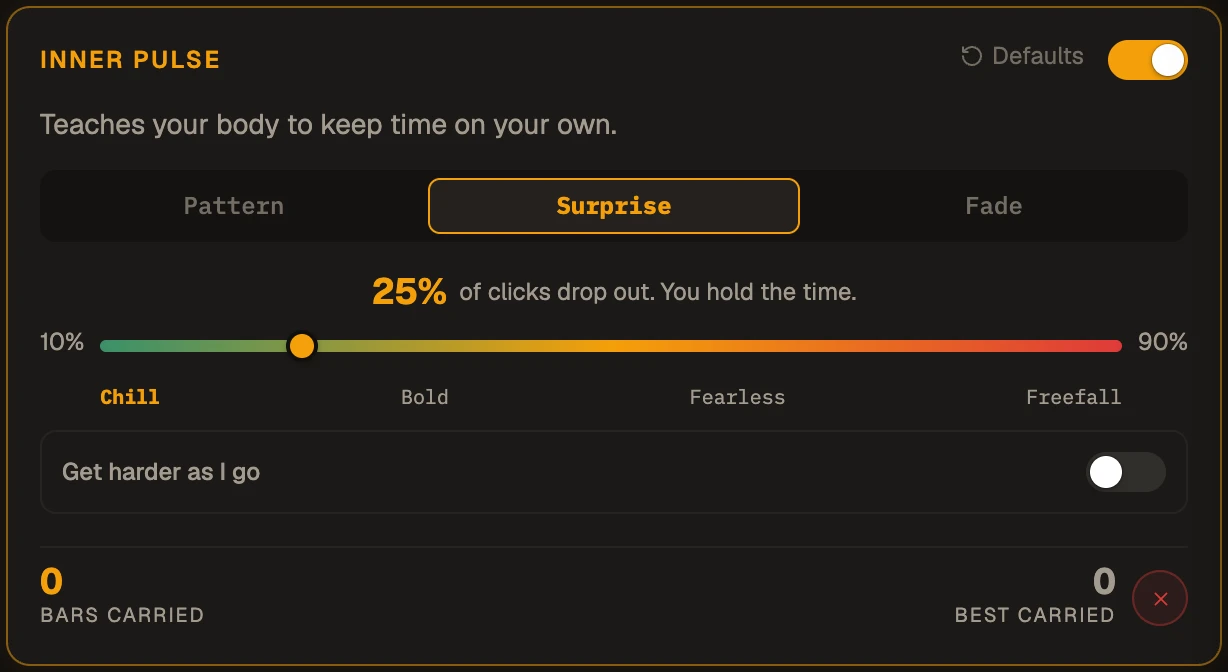
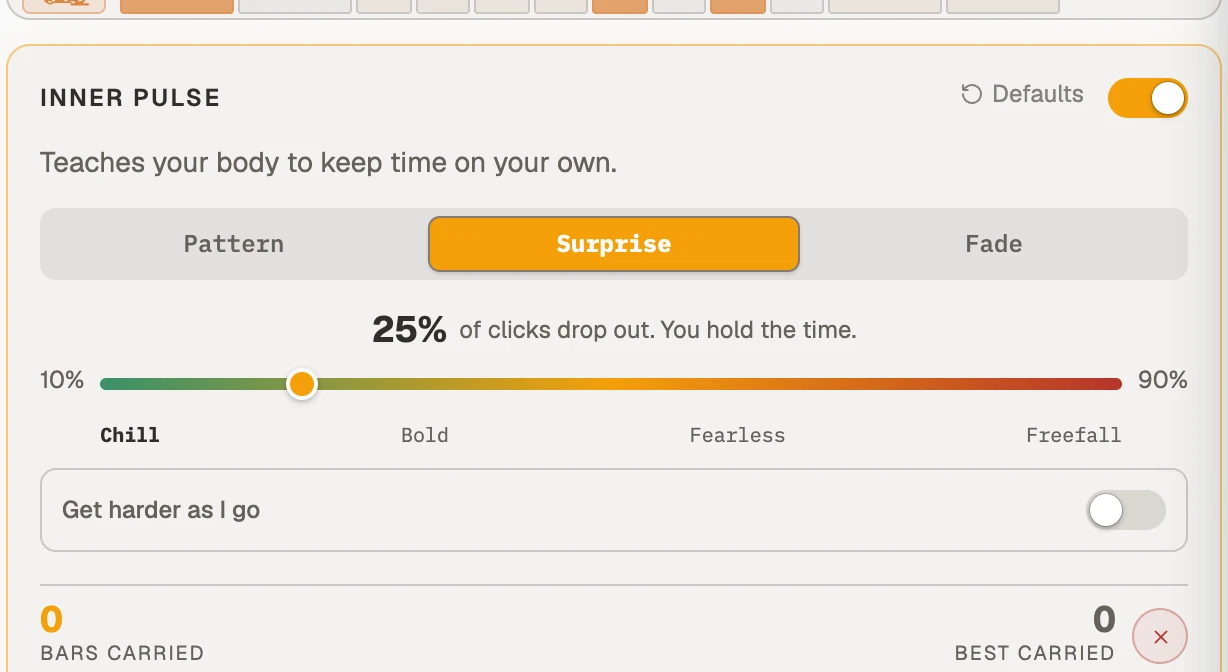
The click, a rhythm or a full drum groove drops out while you keep playing, and comes back to show you where you are. That is the pulse a panel listens for under everything else.
Choose which bars drop out, and keep playing until they don't throw you.
Tap a beat to silence it.
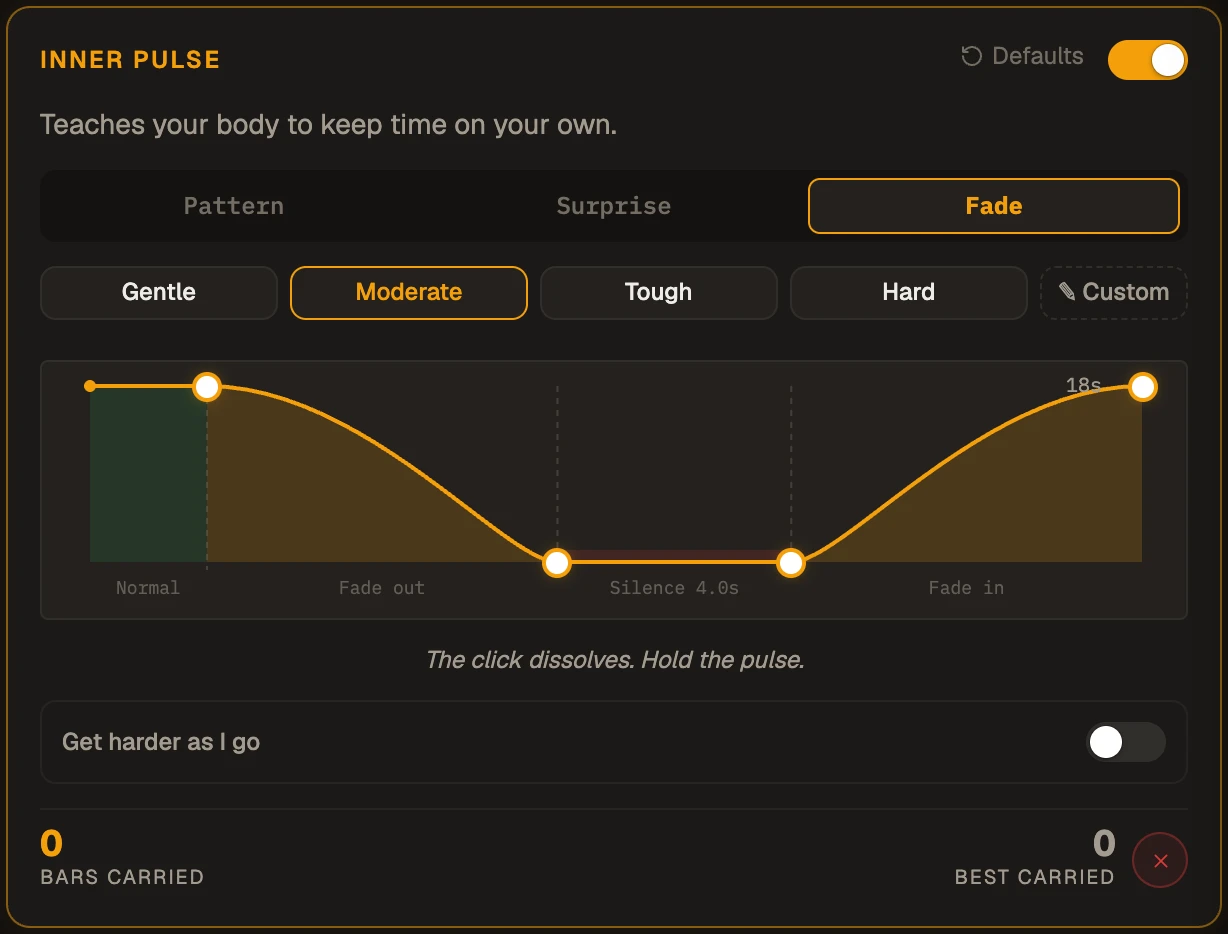
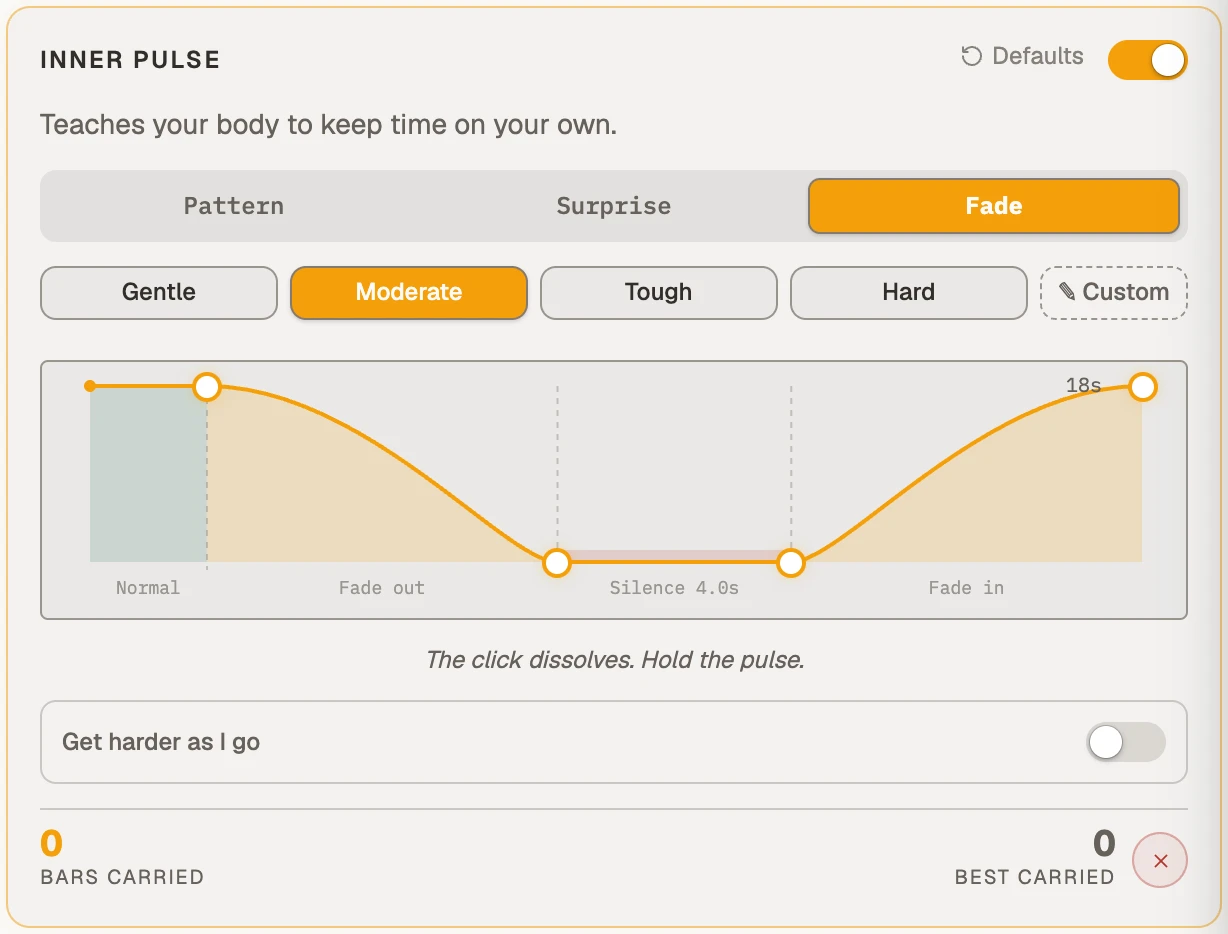
What you build in silence, alone, is what ends up carrying a room full of people.
Triplets into sixteenths, without a hiccupTriplets into sixteenths, without a hiccup
The bar that changes subdivision is the bar that wobbles. Shift gives every bar or beat its own feel on one steady pulse, and prints it as notation.
Four bars, four feels, one pulse
Press play, then tap a bar's feel to change it. Build the figure that worries you, and loop it until it is just another bar.
This is a taster. In the app you can shift between any subdivision and time signature:
- Half
- Quarter
- 8th
- Triplet
- 16th
- Quintuplet
- Sextuplet
- Septuplet
- 32nd
Give a whole bar or a single beat its own, and accent or rest any note.
ClickTap a note to accent itHold it to rest it
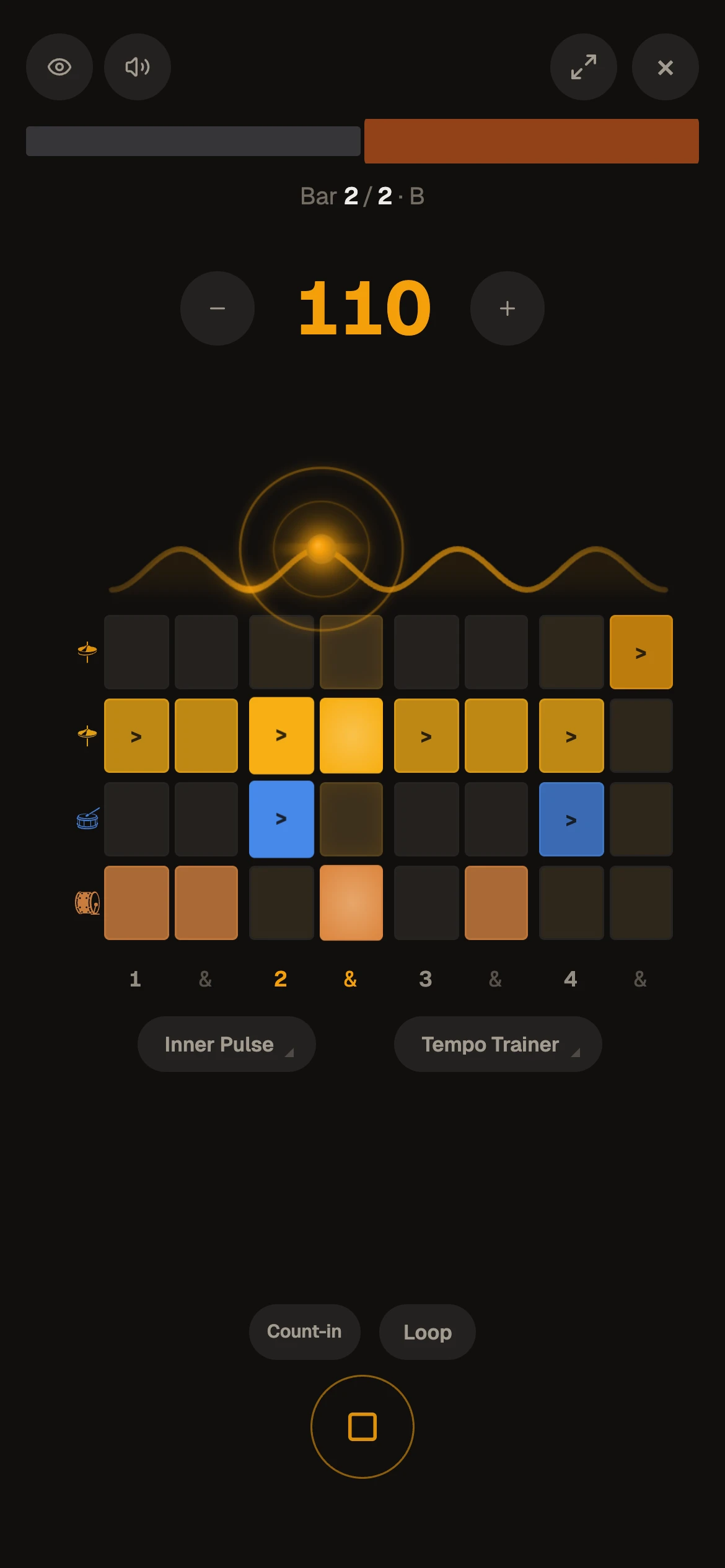
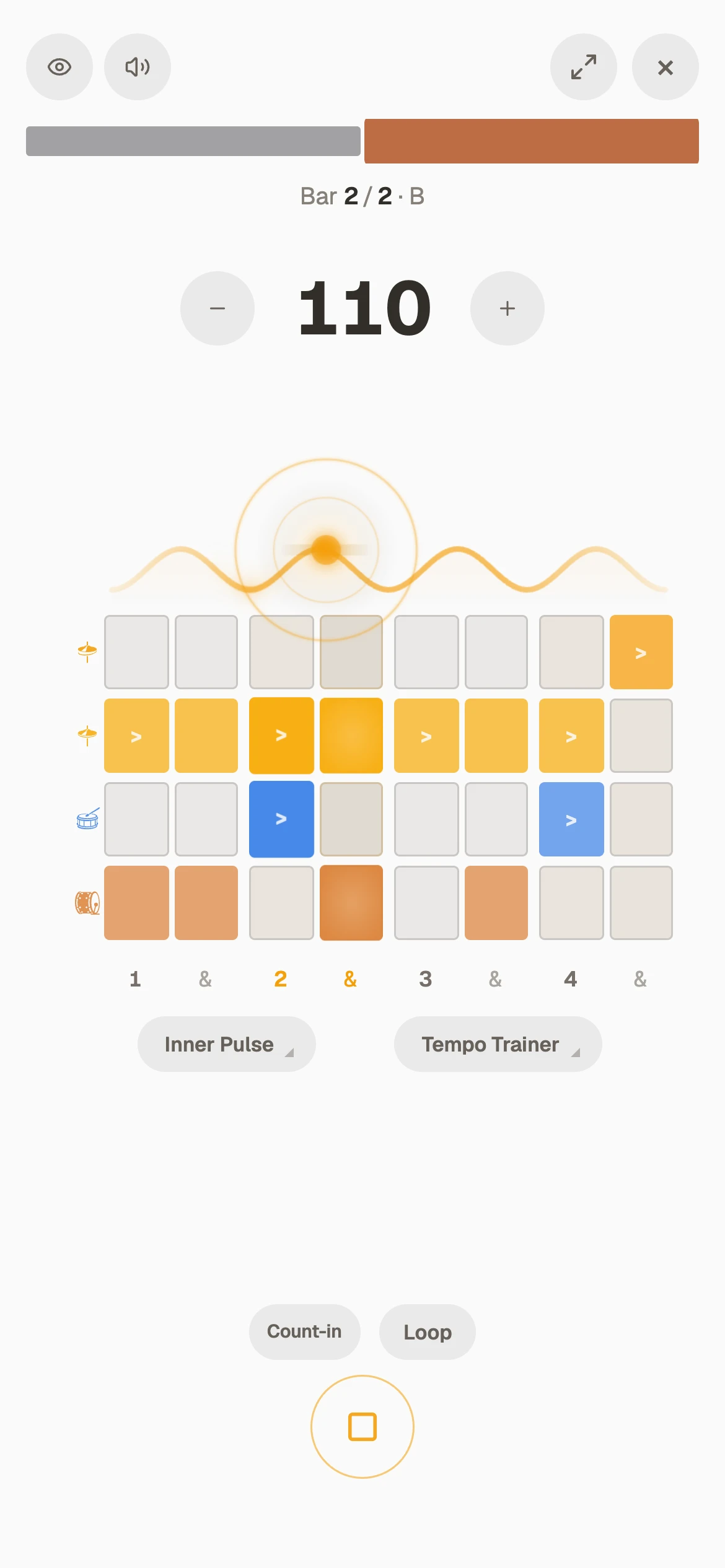
Swing, shuffle, rock, at the tempo you can play today
Real recorded grooves to play over or along with, at any tempo. The rest of the list you build in Beats, bar by bar, and loop.
Every groove here plays on a free account.
From the tempo you can play to the tempo of the piece
Set where you are clean today and where the piece wants to be. The Tempo Trainer walks you up in steps, as many bars each as you choose.
A step at a time, every day
Climb from slow to fast, or practise coming back down to control it. Loop at the target until it sits.
Free with an account, on the whole metronome, all day.
Your audition, as a routine
Make a practice routine to get ready for your audition, and work on exactly the material you need to master: in order, at the right tempo, for the right length. A short Roll session for reading, then press Run. Workout arrives in December, before the January and February auditions.
An example, twenty minutes
- Time, 5 minutesThe metronome, then Inner Pulse fades it out and back.
- Triplets and sixteenths, 4 minutesShift, moving between the two on one pulse.
- Styles, 6 minutesSwing, then a shuffle, then bossa nova, in Beats.
- Your piece, 5 minutesThe hard bars looped, the tempo climbing to the target.
An example. You choose the steps, the tempos and the lengths.
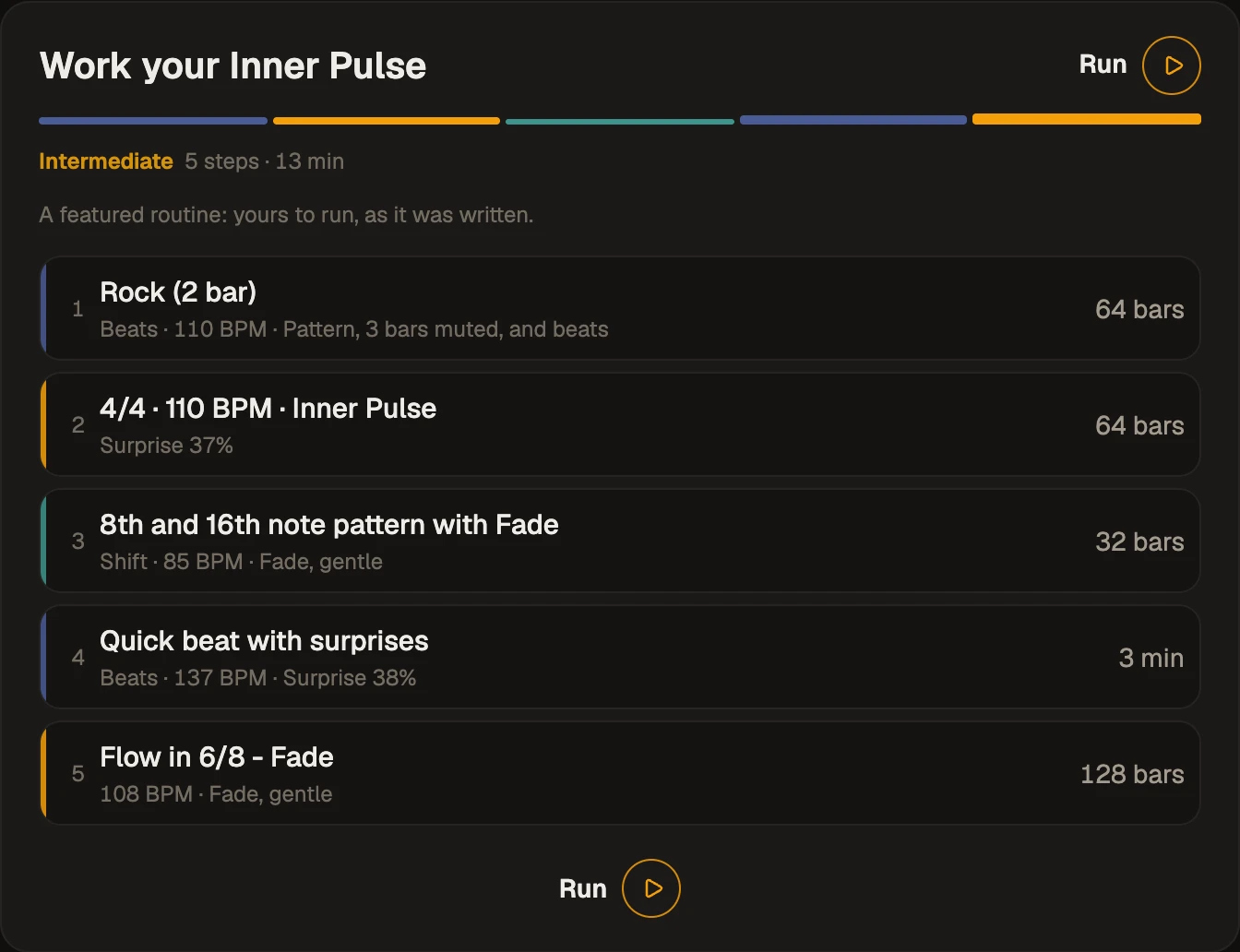
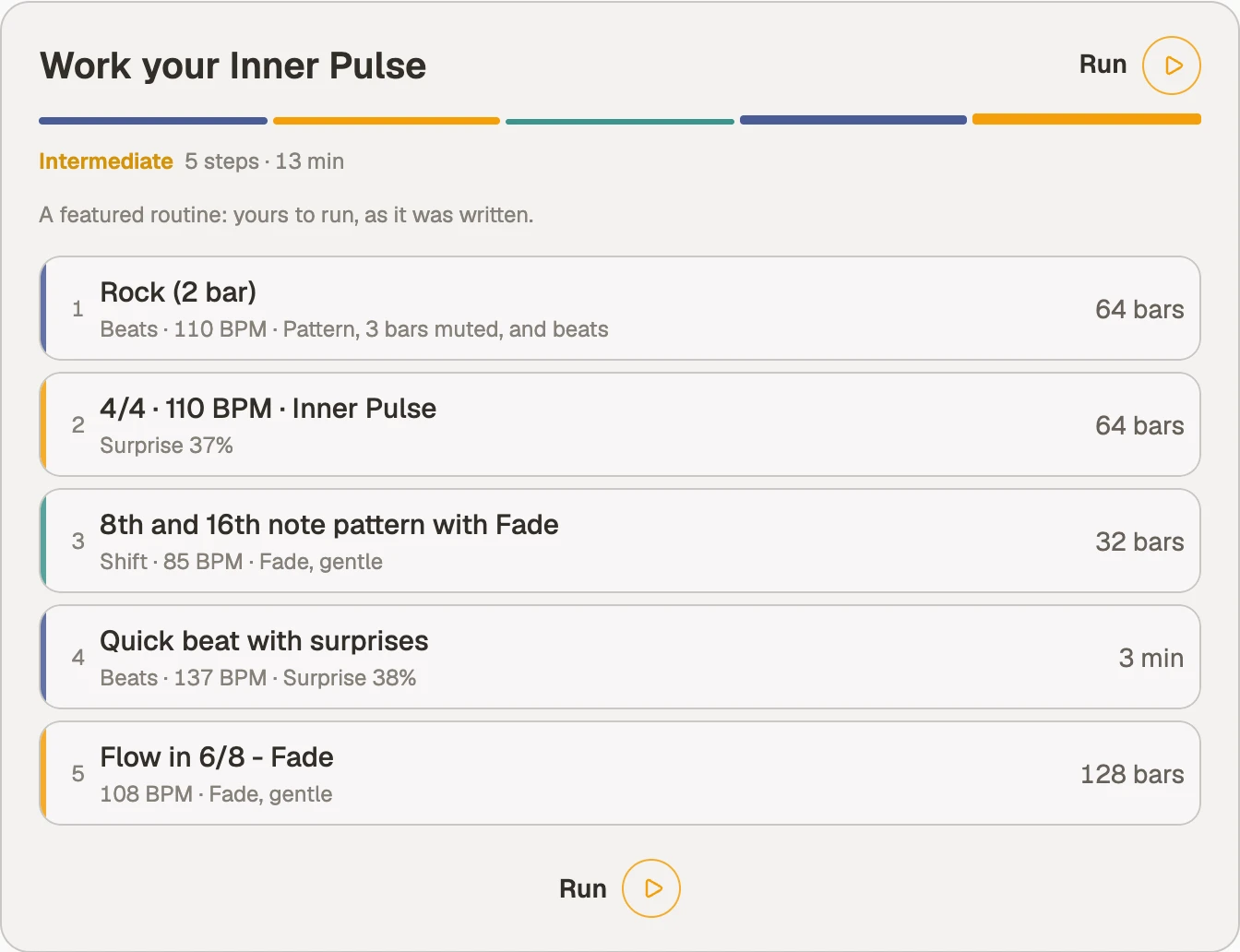
Free to start, no card: the metronome and the Tempo Trainer all day, everything else ten minutes a day.
Create a free account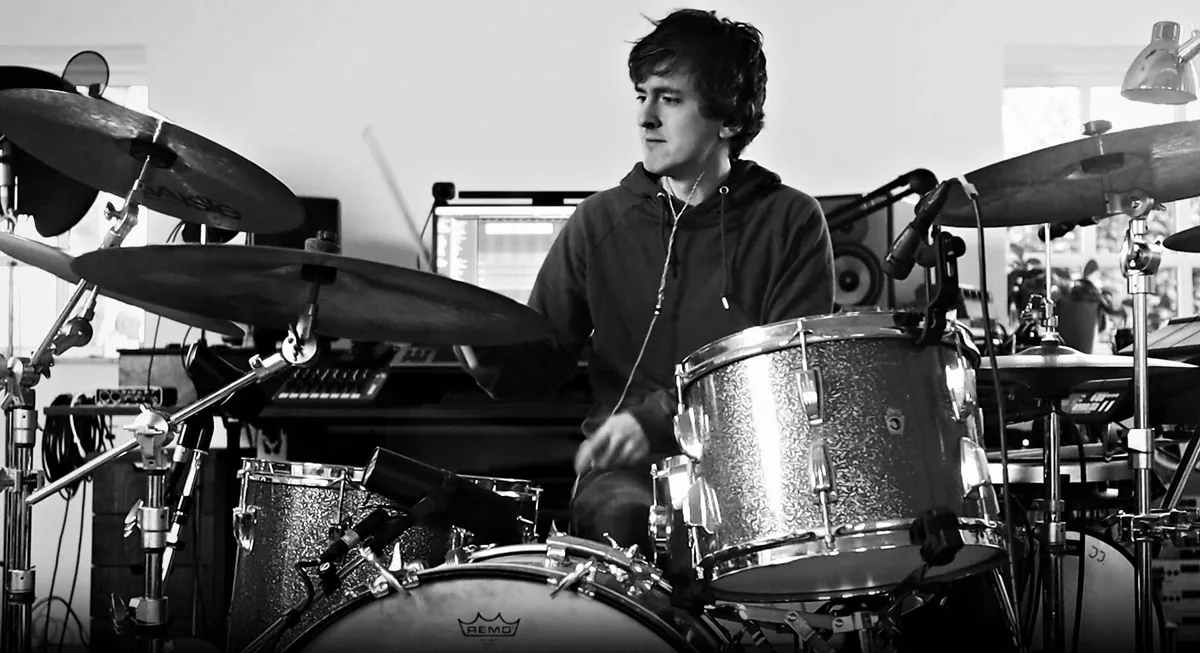
From the Royal Academy of Music to your practice room
I'm a drummer and teacher with a master's degree from the Royal Academy of Music in Aarhus. Twenty years with a click in my ears taught me that the last stretch, holding the time when nothing holds it for you, is the part that shows in the room.
Mikas Emil Søndergaard, drummer and teacher
- 20 yearswith a click in my ears
- 30+private students I teach: drums, singing, production
- 1,400+versions of the app since March 2026
What's free, what's Pro, said plainly
Free
With a free account. The metronome without limit; the rest ten minutes a day.
Not on Free: saving and organising what you build, sync across devices, sharing by link, drum charts to print, and the full library.
Create a free accountLaunch offer · 30% off
Pro Everything in Free, plus
Everything in Free, without the clock, and kept.
Billed yearly: $52.50 $75.
Or $5.24 month to month.
Keep the 30% for as long as you stay.
7 days free, cancel any time. If you stop, you keep Free, and your library stays there waiting rather than disappearing. See the full comparison.
- Every click lands exactly on time, driven by your device's own audio clock
- Installs to your home screen as a standalone app
- The beat on screen stays in sync with Bluetooth headphones and speakers
- Automatic recovery after calls and interruptions
- Playback continues with the screen locked
- The screen stays on while playing
- Plays through the iPhone silent switch
- Stop playback from the lock screen, without unlocking